Drivers of Volatility: War, Tariffs, and China
By Dr. Chris Kuehl | April 22, 2026
Category: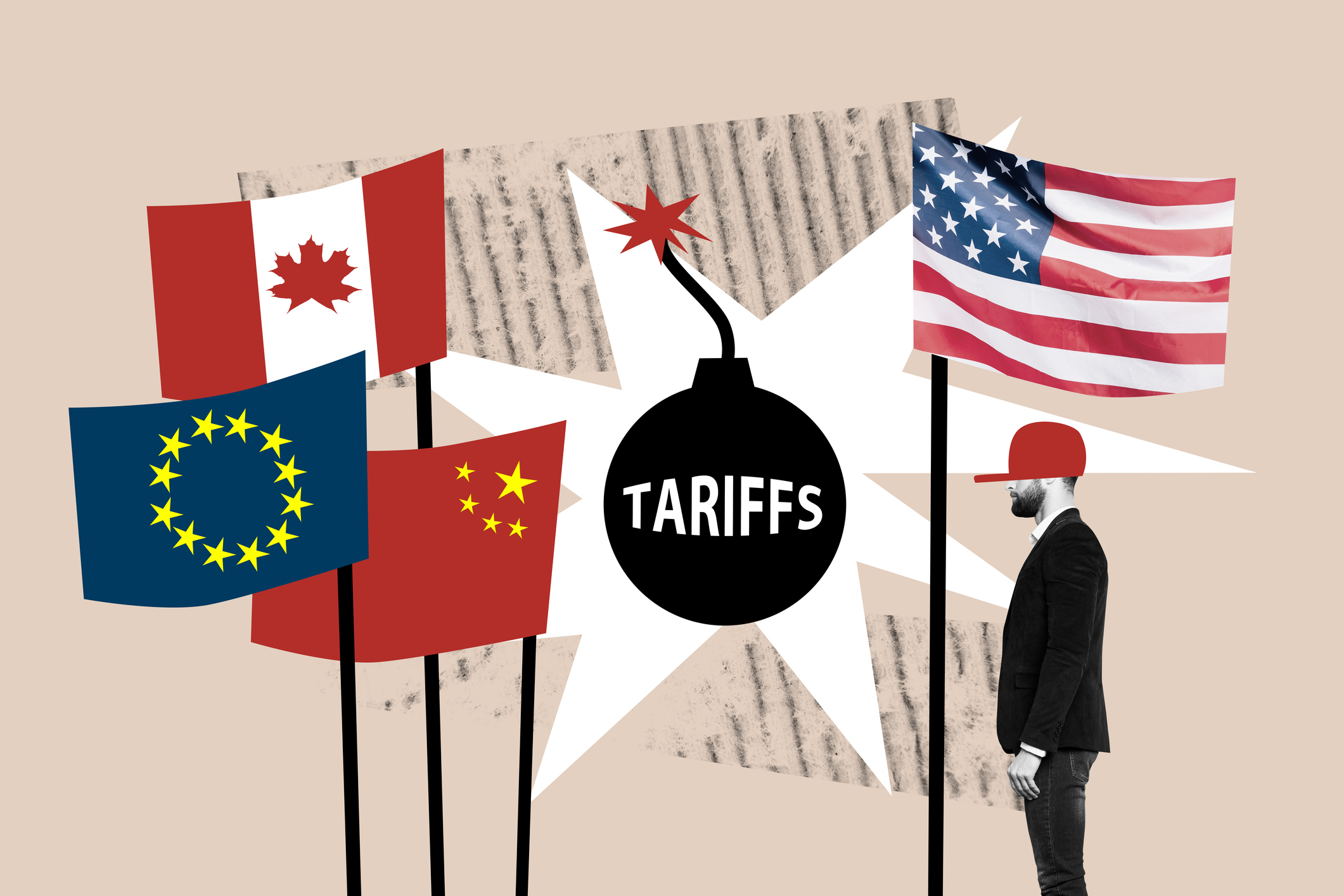
The textbook definition of volatile just about says it all: Likely to change rapidly and unpredictably, especially for the worse. It has been a volatile year, and so was last year. Business leaders adapt to unforeseen change, of course, but when one adds in a series of essentially “man-made” issues, the landscape gets difficult to navigate.
Three drivers continue to shape the current volatile climate. The most recent one is the turmoil that surrounds the Iran war. The oil markets have been significantly alarmed as the transportation of oil from the Middle East has been all but shut down. By now, every person in the U.S. has become familiar with the Strait of Hormuz and understands that the bulk of the oil produced in this region needs to travel through that narrow waterway.
Given that the U.S. is the world’s largest crude oil producer and shipper, it might be confusing to hear that problems in the Middle East matter. It is simply that oil is a traded commodity and the markets set the per-barrel price. That price affects the U.S. output as well as everybody else’s. This is how we get per-barrel oil prices above $100 when they were only between $50 and $60 a few months ago.
Beyond that, the region produces a host of products required by any number of industries—fertilizers, helium, bromine, and an alphabet soup of petrochemicals. This is essentially a supply chain issue, and for the time being, the supply chain is in total disarray, causing inflation spikes as well as mass uncertainty regarding when a given supply item will be available.
As this piece was being written, there was the announcement of a “breakthrough” as a ceasefire was established among Israel, Iran, and the Hezbollah in Lebanon—but it collapsed before the ink was dry. The oil markets celebrated wildly and the price per barrel fell, then surged again. Where will the price end up? This is a complete unknown as it depends on the mercurial moods of leaders in the U.S., Iran, and Israel, among others.
The second major driver is one we have been familiar with for more than a year—tariffs. The Supreme Court’s decision to back up all the previous court rulings on the use of IEEPA to impose a blanket tariff on the world threw the tariff conversation back to its origin. What system will be deployed now and for how long?
The replacement system was Section 122, but it was limited in duration and expires on July 24. It will likely be replaced by Section 301, but that requires investigations. If a country is found violating the provisions prohibiting structural excess capacity rules, they can be hit with high tariffs.
The question when examining structural excess capacity is whether a nation is deliberately overproducing. This may be done to protect jobs or to gain some trade advantage as that extra production is then offloaded to the global market. China has been one of the most aggressive overproducers, but it is a common practice. A nation found to be overproducing will be subject to high tariffs, but it is actually hard to prove deliberate overproduction.
A nation can also be hit with tariffs if it is accused of deploying forced labor to make a product. This is also very hard to prove. Even the U.S. is subject to this because it uses prison labor to produce things. We call this part of a prison rehabilitation effort, but others claim it is also forced labor. Working out these new tariff systems will be time-consuming and confusing.
Most U.S. companies have mixed feelings on tariffs. They know full well that other countries cheat and compete unfairly. They enjoy the potential for some protection, but they also import material and do not appreciate the added costs. Most of the criticism revolves around the uncertainty, as the tariff seems to constantly change.
The third major driver is just starting to emerge and has not had a profound impact as yet. It will. China has been actively pressuring Taiwan and has now declared a no-fly zone that prohibits air traffic between Taiwan and trading partners such as South Korea and Japan. This makes that business very costly and has affected the U.S. supply chain as well.
The Beijing leadership has been actively engaging with opposition parties in Taiwan to exert even more pressure on the current Taiwanese government. The U.S. has been on alert as far as these moves are concerned, but reacting will be costly, as it would mean pulling ships from the Middle East.
The most immediate impact is a supply chain crisis involving what we obtain from Taiwan—the world’s largest manufacturer of chips. There is already a chip shortage due to the interruptions in the Middle East, and further strains related to Taiwan make the issue all the more urgent. A further complication with chip production is allocation. The chipmakers focus on producing high-value chips in demand from data centers as well as the military. This means reduced availability for consumer products, electronics, and vehicles.
Chinese threats have been contained thus far, but recently, Xi Jinping has instituted many high-level purges, including high-ranking military officers, and that may signal a shift in strategy. Those removed had been advocates of an outright invasion, and those who have replaced them seem to favor economic stress through some combination of blockades.
All of these drivers are the direct result of political decisions, and that makes them all the more unpredictable. They came out of nowhere, in most cases, and the duration of the crisis depends on political calculations rather than any kind of economic consideration.
This is what drives business leaders crazy. They can study their customers to determine what their motivation is, and they can study their competitors. They can even gather facts to figure out economic trends. But predicting the actions of political leaders with their own unique agendas is next impossible.
What Does This Mean for Manufacturers? Navigating the politics of trade has been more than vexing. Tariffs are deployed more as political weapons than economic incentives, and for many manufacturers, the result has been negative. That has certainly been the case for consumers. The oil crisis is obviously front and center now, but the bigger issue will be Taiwan and what this could mean regarding China.
About the Author

Dr. Chris Kuehl
Chris is the managing director of Armada Corporate Intelligence. Armada’s mission is to combine the traditions of corporate and competitive intelligence with strategic and tactical planning to provide clients with a clear view of the world they exist in and what they can do to advance their goals. Major clients include YRC Freight, TranSystems, Kansas City Southern Railroad, C-Biz, and others. Chris Kuehl serves as economic analyst for the Fabricators & Manufacturers Association International® (FMA). One of his major roles at FMA is writing an economic e-newsletter titled Fabrinomics®, specifically designed to aid business decision-making by management and shop owners in the metal forming and fabricating industry. Chris also conducts workshops for FMA at major conferences and trade shows.

Side by side, we move metal fabrication forward.
FMA unites thousands of metal fabrication and manufacturing professionals around a common purpose: to shape the future of our industry, and in turn shape the world.
Learn More About FMA